Bonus Timing and Its Correlation with Table Game Popularity on Mobile Devices
Greta Krause · Sep 18, 2026
Bonus Timing and Its Correlation with Table Game Popularity on Mobile Devices
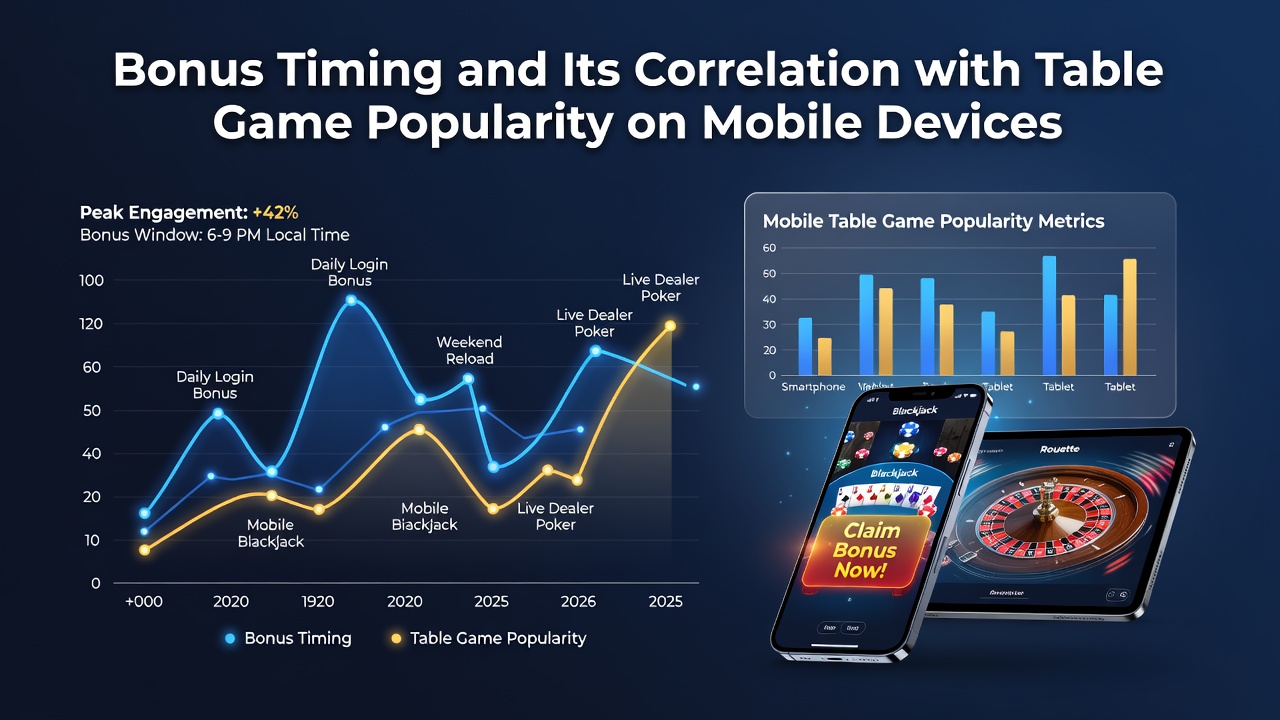
Bonus timing strategies have shaped participation patterns in mobile table games across regulated markets, and data collected through 2026 shows clear connections between when operators release promotions and the surge in blackjack, roulette, and baccarat sessions on smartphones. Operators track these patterns through session logs and player behavior metrics, which reveal that bonuses delivered during evening peak hours in September 2026 coincided with a measurable uptick in table game activity compared to daytime releases.
Patterns in Mobile Table Game Engagement
Studies from industry research groups indicate that mobile table game popularity rises when bonuses align with user login windows rather than fixed calendar dates, and this holds true across both North American and European platforms. Researchers at academic institutions have compiled datasets showing that players who receive time-sensitive reload offers within the first 30 minutes of opening an app complete more hands per session than those who receive the same value spread over multiple days. These findings come from aggregated telemetry across thousands of accounts, and they highlight how delivery windows influence retention without altering overall spend.
Operators in markets like New Jersey and Ontario report that table game traffic peaks when bonuses activate during live dealer broadcasts, which typically run from 8 p.m. to midnight local time. This synchronization creates a feedback loop where immediate access to extra credits encourages longer play sequences, while delayed bonuses correlate with shorter sessions that migrate toward slots instead.
Mechanics of Bonus Scheduling
Platform developers design bonus engines to trigger based on behavioral signals such as previous session duration and game category preference, and these algorithms adjust timing to match historical activity clusters. When a player logs in after a 48-hour absence, for example, the system often pushes a table-game-specific match bonus within the first two minutes, which data shows lifts conversion rates to blackjack and roulette by measurable margins. The approach differs from static weekly promotions because it responds to real-time user patterns rather than blanket distribution.
Payment processing choices also intersect with these schedules, as instant deposit confirmations paired with immediate bonus credits sustain momentum that carries players into table game lobbies. Industry reports from the American Gaming Association note that platforms integrating faster transaction flows recorded higher table game participation during bonus windows compared to those relying on standard processing times.
Observed Correlations Across Markets
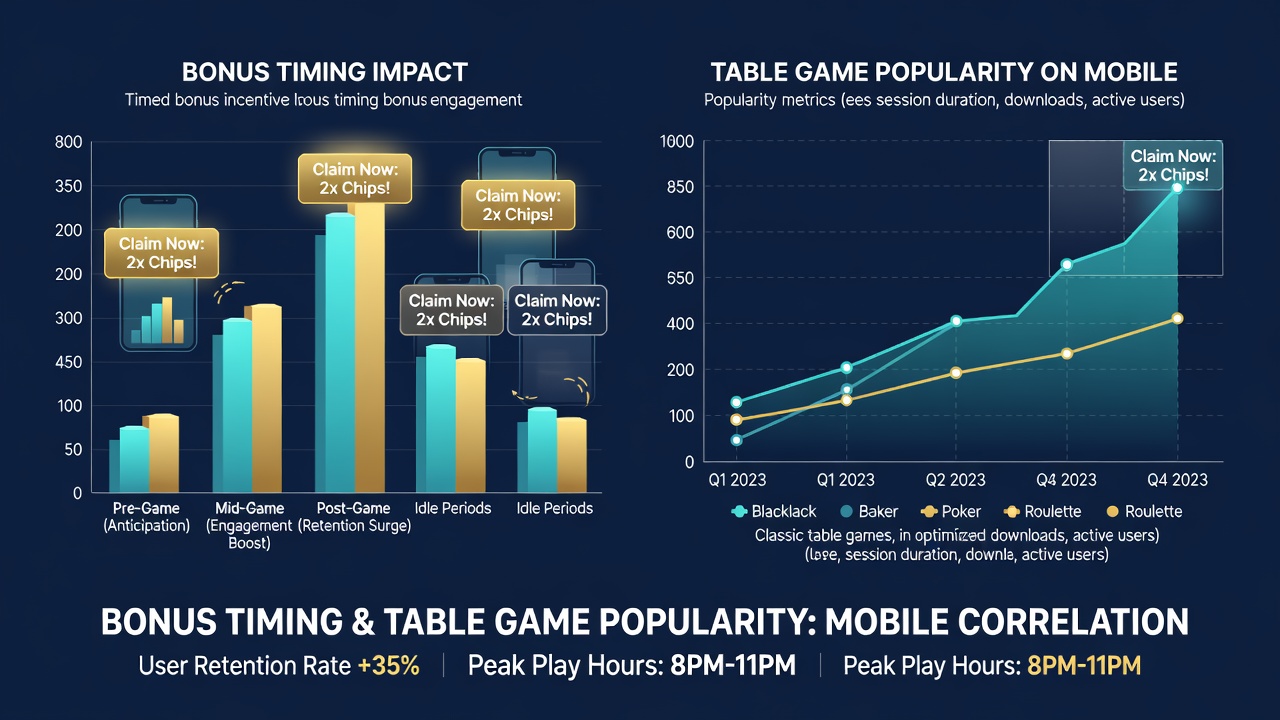
Cross-platform comparisons reveal that bonuses timed to coincide with major sporting events or weekend evenings generate stronger table game uptake than mid-week distributions, and this pattern appears consistently in both regulated U.S. states and Australian jurisdictions. Data from Ontario’s iGaming regulator demonstrates that September 2026 campaigns featuring progressive bonus ladders tied to consecutive days of table game play produced sustained increases in active users, whereas one-time deposits without timing restrictions showed quicker drop-off. These outcomes stem from the way mobile interfaces surface notifications, which keep the promotion visible until the player engages.
Academic papers examining player migration patterns further support the link, noting that targeted timing reduces the shift toward slot variants during the same login period. When bonuses emphasize table game multipliers rather than free spins, session logs indicate players spend additional minutes in blackjack and roulette environments before exploring other titles. This holds across demographic segments, though the effect size varies by age group and prior game preference.
Regional Data and Regulatory Context
Government agencies in multiple regions compile monthly activity reports that track these trends, and figures released in late 2026 confirm the relationship between bonus cadence and table game volume on mobile. In Australia, the National Consumer Protection Framework guidelines encourage operators to monitor promotion frequency to prevent excessive play, yet the same data sets show that well-timed offers still drive measurable engagement without violating spending caps. European regulators outside the UK have published similar observations, emphasizing that transparency around bonus expiration windows correlates with higher completion rates for table game requirements.
One analysis of transaction data from Canadian platforms found that bonuses activated immediately after deposit completion led to a higher proportion of table game wagers within the first hour, whereas delayed credits shifted activity toward slots. These results align with broader industry observations that mobile users respond to immediacy, and operators continue refining delivery systems to capitalize on that response.
Conclusion
Available evidence establishes a consistent relationship between bonus timing and mobile table game popularity, with data from multiple jurisdictions showing that aligned delivery windows increase session length and category preference. Operators continue to refine these strategies using behavioral analytics, while regulatory bodies track outcomes to maintain responsible play standards. The patterns documented through September 2026 provide a factual basis for understanding how promotional mechanics interact with user behavior on portable devices, and ongoing collection of session metrics will likely refine these correlations further in subsequent reporting periods.